Trauma and grief
The Book ThiefTrauma and grief are among the central conditions of life in the novel: war enters the bedroom, the basement, the street, and the mind, while loss continues long after the immediate danger has passed. The suffering is both intimate and collective, and its effects range from Liesel Meminger’s recurring nightmares to Max Vandenburg’s physical collapse, Michael Holtzapfel’s suicide, and the deaths that follow the bombing of Himmel Street.
Nightmares and the Formation of Trust
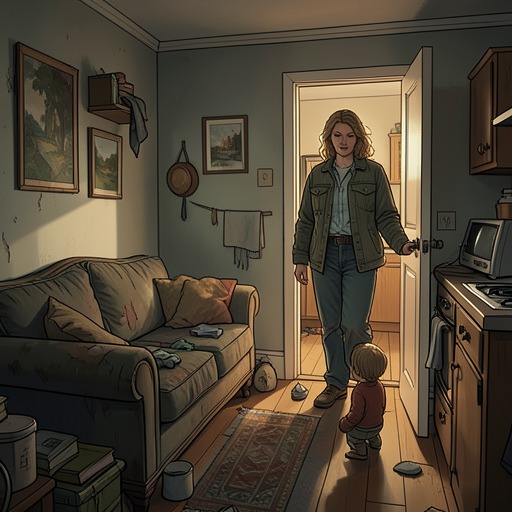
The earliest trauma belongs to Liesel Meminger, who arrives in foster care after the death of her brother. The first months are described as the hardest, and every night she has nightmares in which her brother’s face stares toward the floor. She wakes screaming and soaked in the sheets, while the empty bed intended for him appears to float like a boat in the darkness before sinking into the floor as consciousness returns. The room therefore preserves the loss as a recurring physical image: the brother is absent, yet his bed remains an active presence.
The nightmares also create the first durable bond between Liesel Meminger and Hans Hubermann. Hans comes into her room each night, initially remaining beside her as a stranger who prevents aloneness, then whispering reassurance, and eventually holding her. His constancy turns the moment of terror into a structure of care. Trust accumulates through his repeated arrival in the middle of her screams and through the certainty that he will not leave. Trauma thus produces vulnerability, but it also makes visible the sustaining power of gentleness and presence.
War Written on the Body
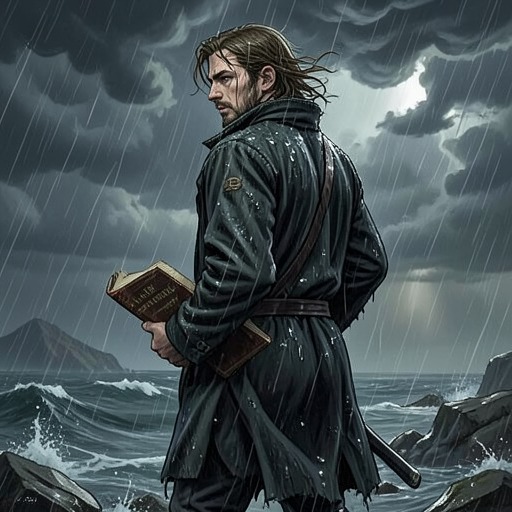
The novel repeatedly refuses to separate psychological suffering from bodily conditions. Max Vandenburg spends time on cold cement, where minutes become cruel and hours punishing. His later decline is marked by constant coldness, trembling hands, visions of boxing with Hitler, failure to warm himself after exercise, weight loss, and a regimen that collapses with his cheek against the basement floor. By early February he sleeps into the morning, his mouth becomes distorted, and his cheekbones swell; in mid-February he nearly falls into the fire. His insistence that he is fine cannot conceal a body overwhelmed by concealment, deprivation, and illness.
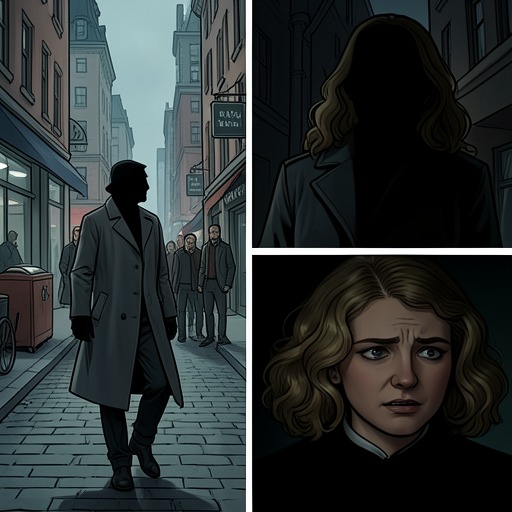
War also appears in the bodies of those marched through the town. On Munich Street, Liesel Meminger and Hans Hubermann watch Jewish prisoners come down the road with enormous eyes in starving skulls, dirt molded to their bodies, and legs staggering under soldiers’ hands. The crowd’s act of watching becomes an encounter with mass suffering: the prisoners are treated as a procession, yet each is also moving toward death. The narrator’s insistence on their colors and their future deaths turns visual perception into an ethical demand to witness what public violence tries to reduce to spectacle.
Other wartime bodies carry injury into the lives of survivors. Frau Holtzapfel’s son Robert loses both legs below the shins in a small war story and dies. The detail of the severed legs becomes an image that later haunts Michael Holtzapfel, who has seen his brother’s destruction and cannot sleep. In the transport accident near Essen, six men are burned by cigarettes and two suffer broken hands. These injuries are not abstract symbols: they are the material consequences of military systems, battlefield violence, and dangerous wartime movement.
Guilt, Silence, and the Failure of Consolation
Michael Holtzapfel’s grief develops into survivor’s guilt. After returning from Stalingrad with a damaged hand and the knowledge of Robert’s death, he is worn down not by the hand itself but by the guilt of living. His sleeplessness becomes a nightly poison, accompanied by visions of his brother’s severed legs. Liesel Meminger recognizes his condition but cannot easily speak to it. She considers telling him about her own brother, as she told Max Vandenburg, yet understands that the two losses do not feel interchangeable: one is a distant cough, the other an obliterated body.
Michael’s inability to speak while alive is part of the tragedy. The most important words of such sufferers may be saved for the moment after death, when the living discover a note, a sentence, a question, or a letter. Michael kills himself because he wants to live, a paradox that presents suicide as the final expression of a life made unbearable by memory and guilt. The narrator’s distance from the event is itself significant: the narrator says that the death was learned later through The Book Thief, emphasizing how trauma can be received belatedly through another person’s account rather than directly witnessed.
Collective Shelter and Repeated Catastrophe
Trauma is also organized socially during the air raids. In the Fiedlers’ deep basement, twenty-two people crowd together, including the Steiner family, Frau Holtzapfel, Pfiffikus, a young man, and the Jenson family. The room is dank and cold, with jagged walls, one hanging light globe, and sirens whose distorted sound enters the shelter. Fear is shared, but the shelter is not free of conflict; Rosa Hubermann and Frau Holtzapfel are kept apart to preserve a civil environment. Survival depends on both communal proximity and the management of ordinary antagonisms.
The next raid is explicitly described as real. On September 19, a radio announcement lists Molching as a possible target, and Himmel Street again becomes a trail of people moving toward safety. Hans Hubermann again leaves his accordion behind, refusing Rosa Hubermann’s reminder because he did not take it during the previous raid and they survived. The decision exposes how repeated danger unsettles the boundary between practical reasoning and superstition. Each raid repeats the earlier pattern while altering its emotional weight: warning, movement, crowding, and waiting become a ritual of fear.
Death, Farewell, and Narrative Memory
The narrator presents death as a force pursued by the living and repeatedly summoned by their exhaustion. Many people call for death to take them, not because they fear death itself, but because they fear the consequences of continuing to live and facing themselves again. This formulation connects individual despair to the wider moral damage of war. Death cannot rescue everyone from suffering, yet the narrative remains preoccupied with the choices, wounds, and burdens that bring people toward it.
The bombing of Himmel Street turns accumulated trauma into irreversible communal loss. Rudy Steiner dies in bed beside one of his sisters, still warm beneath the blanket. The narrator sees within him several earlier forms of the boy: the child who imitated Jesse Owens, the swimmer pursuing a book, and the adolescent imagining a kiss from his next-door neighbor. Rudy’s death is therefore both sudden and densely retrospective. His life is gathered through recurring images just as his body is carried away, and the narrator admits that Rudy affects him more than most, making him cry.
The Hubermanns die as part of the same destruction. Hans Hubermann is identified as Papa, linking his death to the care he once offered Liesel Meminger during her nightmares. After the bombing, Liesel must say goodbye repeatedly, and she later remembers her books during the worst moments of sorrow, especially those made for her and the one that saved her life. When she returns to Himmel Street one morning to find them, nothing remains. The absence of the books gives grief a material form: not only people but also the objects that carried memory have been destroyed.
The narrative finally makes trauma survivable through delayed telling. The book thief dies many years later, while the account preserves the people and losses that the physical world could not retain. Storytelling does not restore Himmel Street, the books, or the dead, and it does not promise recovery on a convenient schedule. Liesel Meminger’s return to the ruined street shows that some losses require decades and a long life before they can even begin to be borne. Trauma and grief therefore remain both the subject of the story and the reason the story must exist: remembrance becomes a form of continued witness when bodies, homes, and voices have disappeared.